About Sashiko
Today, sashiko is widely known for its repeated stitches and beautiful patterns. But the more I have researched it, the more difficult I have found it to describe sashiko as one technique that began in one particular place at one particular moment.
Long before the word sashiko came to be used in the ways we know today, people in Japan had been stitching, layering, joining, reinforcing, and repairing cloth. The materials, methods, names, and purposes differed depending on the period and region, and some of these practices may later have come to be called sashiko.
For that reason, I prefer to think about sashiko within the much longer history of people working with cloth, rather than trying to give it one simple starting point.
Perhaps the Stitching Came Before the Name
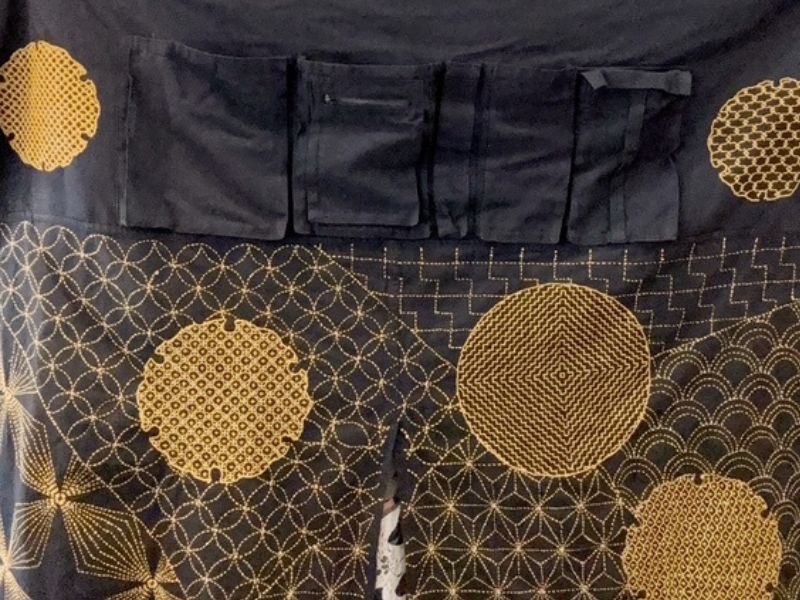
An old textile with repeated stitches is not automatically “sashiko,” and we cannot assume that people in earlier periods used that name. So I now separate two questions: When did people begin stitching, layering, reinforcing, joining, and repairing cloth? And when did some of these practices begin to be called sashiko?
Today, the word sashiko is used in many different contexts. Outside Japan, it is also often introduced alongside BORO and Visible Mending. These practices may meet and influence one another today, but their histories and contexts are not necessarily the same.
If you would like to explore these questions in more detail, I have brought together my research in Sashiko Journal | Tracing Sashiko Through Historical Sources.
Why I Continue Learning About Sashiko
canoha is a small shop and workshop in Tokyo. I started canoha in 2017, originally with handmade accessory workshops, and began teaching sashiko in 2018.
At first, I simply wanted to stitch sashiko more beautifully. But as I continued teaching, more questions appeared. Why did people stitch cloth? What did they wear before cotton became widely available? Why did clothing differ from one region to another? How did patterns come to be associated with sashiko? And what do we actually mean when we use the word sashiko today?
The more I researched, the more I realized that sashiko cannot be understood through stitches alone. Cloth, clothing, fibers, climate, work, regional differences, social conditions, and everyday life are all connected. That is why I began reading Japanese historical sources and research more closely.
I am still learning. New sources may change the way I understand something, and one question often leads to another. That process has become an important part of sashiko for me.
Learn Sashiko at canoha
Reading about sashiko is one way to understand it. Holding a needle and actually stitching cloth is another. At canoha, I teach sashiko through small workshops in Tokyo, from the basic movement of the needle to patterns and different ways of enjoying this handwork.
Whether sashiko is completely new to you or you would like to explore it more deeply, I hope the workshops and the Journal can offer two different ways of discovering it.
Instagram|Sashiko Workshop
Stay up to date with the latest news from our sashiko workshop.
On our dedicated Sashiko Instagram, we share information about upcoming workshops, students’ beautiful creations, behind-the-scenes moments, and the everyday life of our studio.
Our Stories offer a more personal glimpse into the creative process, daily life in the shop, and little moments that don’t always make it onto our website.
If you’re wondering what it’s like to join one of our workshops or would like to get a feel for the atmosphere, we’d love to welcome you on Instagram.
Come and discover the world of cano-ha, one stitch at a time.